Flood cleanup in Brampton & the GTA, when every hour counts.
Fast water extraction and structural drying after a basement flood, burst pipe, or major water event. Available 24/7 across the GTA West.
Our Flood Cleanup Response
What the drying stage actually looks like.
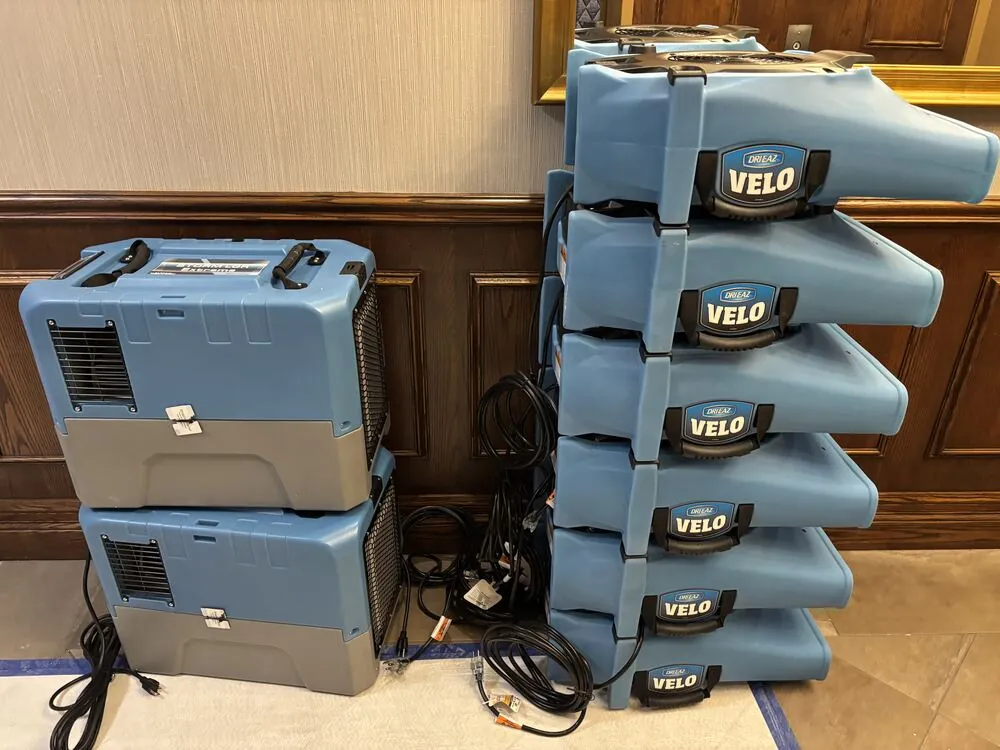
Extraction is the first few hours; drying is the days after it, and it is the part that decides whether the floor is saved. Air movers and dehumidifiers stay in place and get metered daily until the readings say the structure is dry — not until it feels dry. Where remediation is needed beyond that, it is carried out by licensed restoration contractors working to the industry guidelines. Full detail on water damage restoration.
What the training actually is. Kharl Reynolds is trained to the IICRC's Water Damage Restoration Technician standard, known in the trade as the WRT. The IICRC is the body that sets the training standard for this work. The WRT is the part of it that covers water: how the category of the water changes what can be saved, how fast materials have to be dried, and how to read a moisture meter instead of guessing. It is a certification held by a person, not a badge bought by a company.
What to do in the first hour.
If it's safe to do so, the first priority after discovering a flood is stopping the water source — shutting off a burst pipe's water supply, or unplugging and moving away from standing water near any electrical outlets or appliances. After that, calling for extraction as early as possible matters more than almost anything else. Water that's been sitting for a few hours is far easier to fully extract and dry than water that's had a day or more to soak into flooring, baseboards and subfloor.
Once on-site, our first step is removing standing water with commercial-grade pumps and extraction equipment, followed by placing air movers and dehumidifiers to begin structural drying. We monitor moisture levels throughout the drying process using moisture meters, rather than guessing when a space is dry, since surfaces can look and feel dry on top while still holding moisture underneath.
Clean water versus contaminated water.
Not all flooding is the same. A burst supply line or overflowing bathtub is generally considered clean water and can often be fully extracted and dried without major material loss. Water from a sewer backup or extended flooding from outside the home is considered contaminated and requires different handling, including discarding porous materials that have been in contact with it, since they can't be safely sanitized. We assess which category applies during our initial visit and explain what that means for your specific situation.
Working with insurance after a flood.
Many flood events — burst pipes, appliance failures, sudden leaks — are covered under standard homeowner's insurance, though coverage varies by policy and by cause of the flood. We document the affected area and the work performed with photos and notes, which is often required to support an insurance claim. We'd recommend contacting your insurance provider as early as possible, since many policies have specific requirements around timely reporting and mitigation steps.
Basement flood cleanup.
Basements are where most of these end up, because water goes down and stops at the lowest finished floor. A failed sump pump, heavy rain against a foundation or a burst supply line upstairs all arrive in the same place, and a finished basement means carpet over underpad over concrete, which is the combination that hides water best. The order the work runs in — extraction first, then mapping how far the water travelled, then opening the walls and drying — is set out step by step in our walkthrough of the first day after a basement flood.
Below grade also dries slower. There is less air exchange, the concrete underneath holds cold, and the humidity has nowhere to go on its own, which is exactly why dehumidification matters more down there than anywhere else in the house. Air movers alone in a closed basement can raise the humidity faster than they lift moisture off the floor.
Storage is the other basement problem. Anything sitting on or near the floor has usually absorbed water before anyone noticed, and cardboard in particular wicks it upward. We will tell you what is worth drying and what is not rather than billing drying days against something that has to go.
Frequently asked.
How fast can you respond to a flood?
We take flood calls 24/7 and prioritize emergency dispatch, since speed makes a real difference in how much can be saved. Response time depends on your location and current job schedule — call for the fastest estimate.
Is flood cleanup covered by insurance?
Many flood events are covered under standard homeowner's policies, though it depends on your specific policy and the cause of the flood. We provide documentation to support your claim.
What's the difference between flood cleanup and water damage restoration?
They overlap significantly — flood cleanup typically refers to larger-scale water events, while water damage restoration covers both large floods and smaller leaks. Both use the same extraction and drying process.
What will flood cleanup cost?
There is no honest way to quote a flood over the phone. The cost depends on how much water there is, how long it has been sitting, whether it is clean or contaminated, and which materials have absorbed it. Those are the things that decide how many drying days the job needs. What we can tell you is that the assessment itself is free: we come out, look at it, and give you a figure before any work starts. If you are claiming on insurance, we document the damage as we go so the quote and the photographs support the claim.
Flooding right now?
Call immediately — we take flood calls 24/7.
Bigger Than a Leak, and It Needs a Faster Response
Flood cleanup covers larger-scale water events than a typical leak or appliance failure. Basement flooding from heavy rain or a failed sump pump. A burst pipe that has released a significant volume of water before anyone shut it off. Sewer backup. Overland flooding from severe weather. What separates a flood from a smaller water damage event isn't just the water volume; it's usually the area affected and the number of surfaces and materials involved. A slow leak under a sink might affect a few square feet of flooring. A basement flood can affect the entire lower level — carpet, drywall, baseboards, and anything stored on or near the floor — all at once.
Because of that scale, flood cleanup calls for a faster, more coordinated response than routine water damage. We prioritize flood calls specifically and can typically mobilize equipment the same day. The difference between extraction within a few hours and a day or two later often determines whether flooring and drywall can be saved or have to be replaced.
What happens in the first hour after we arrive.
We start by assessing how far the water has spread and what type of water is involved — clean water from a supply line or rainwater is handled differently than contaminated water from a sewer backup, which requires additional precautions. From there, standing water gets extracted first using high-capacity pumps and extraction equipment, since removing bulk water is always the priority before drying can meaningfully begin. Once standing water is cleared, we place commercial air movers and dehumidifiers throughout the affected area, to begin pulling moisture out of carpet, padding, drywall and subfloor. Surfaces that look dry on top can still be holding significant moisture underneath. That is why professional-grade drying equipment matters more than open windows and a box fan for anything beyond a minor spill.
Why the first 24-48 hours matter so much.
Materials that stay wet for more than a day or two become significantly more likely to need replacement rather than restoration, and the conditions for mould growth become favourable in that same window. This is the core reason flood cleanup is a 24/7 service for us rather than a standard-hours booking — a flood that happens Friday night can't reasonably wait until Monday morning without meaningfully worse outcomes. Fast extraction and drying is also simply the most effective form of mould prevention; addressing the moisture quickly is far more effective than treating mould after it's had days to establish itself.
Working with your insurance company.
Flood damage from sudden events like a burst pipe, sump pump failure, or storm-related water intrusion is often covered under standard homeowner's insurance, though coverage details and exclusions (particularly around sewer backup and overland flooding) vary significantly by policy. We document the affected areas and the extraction and drying work performed, including photos, which is typically needed to support a claim. We'd still recommend contacting your insurance provider as early as possible, since many policies have specific requirements around how quickly water damage needs to be reported and mitigated.
After the water is gone.
Extraction and drying address the emergency, but they're usually not the final step. Once the space is fully dry, carpet and affected surfaces typically need a full cleaning pass to address any residue left behind — this matters more after contaminated water events than clean-water ones. Where carpet, padding or drywall was saturated for an extended period before we were called in, replacing those materials may be the more realistic outcome than trying to restore something already too far gone. We will always be straightforward about that assessment rather than trying to save materials that genuinely need to go.
Real reviews from real customers.
Feedback from homeowners across Brampton, Mississauga, and the GTA West.
Water damage, stage by stage and city by city.
A loss runs in stages and each one has its own page. Emergency water extraction covers the first hours, when bulk water comes out. Structural drying covers the days after it, metered daily rather than guessed. Flood cleanup is the same work at larger volume.
What changes between cities is the housing, and what gets in the way of starting. In Brampton finished basements are the pattern. In Mississauga the building decides when work can begin. In Toronto access and a second decision-maker slow the first hour. In Caledon a hose simply will not reach.